
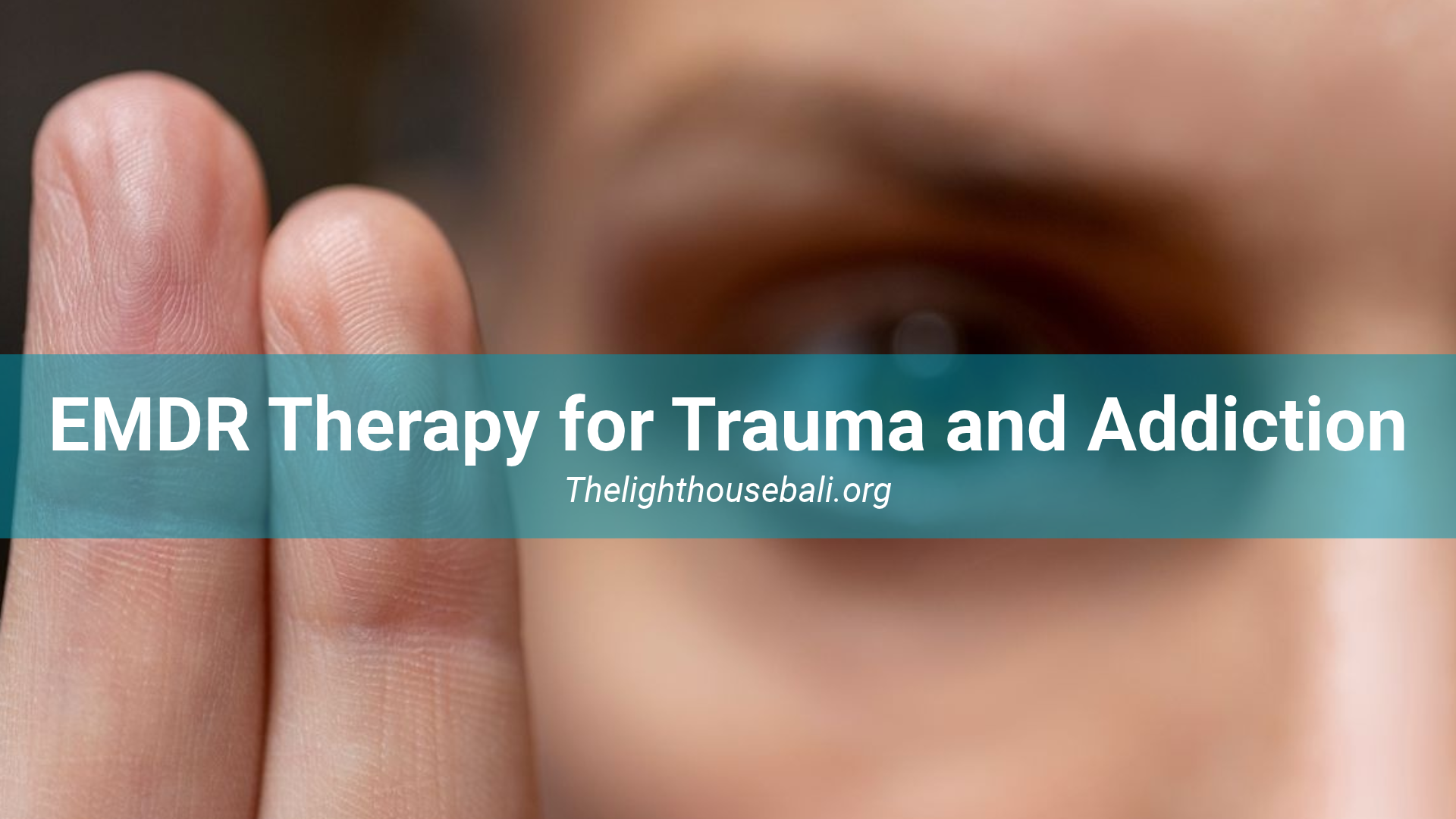
EMDR Therapy for Trauma and Addiction
Some memories never get filed as the past. They stay filed under “now”, and your body answers them as if they were still happening. EMDR is a therapy that helps the brain finish filing them. If you drink or consume substances to get through certain feelings, that matters, because one of those un-filed memories is often what the addiction is answering.
You may have already done the work in counselling. You know your patterns, and you can trace the addiction back to where it started. And you still drink. That isn’t a failure on your part, and it doesn’t mean the counselling was wasted.
Knowing “why” a memory hurts is one kind of change. Changing how it still lands in your body today is another. EMDR works on the second. Below, we cover how it works, what a session is like, and why it can reach what years of talking sometimes haven’t.

What is EMDR, and why would eye movement change anything?
EMDR stands for Eye Movement Desensitisation and Reprocessing. It helps a painful memory lose its emotional charge, so you can remember it without reliving it.
Most hard experiences settle on their own. You think about them, sleep on them, and slowly they become the past. Some don’t. They stay stored in a raw form, with the same fear, shame or tension attached as the day they happened. Then something small, a tone of voice or a certain kind atmosphere, sets them off, and your reaction feels far bigger than the moment deserves.
The psychologist Francine Shapiro developed EMDR in the late 1980s. Today the World Health Organization (2013) and NICE in the UK (2018) both recommend it for post-traumatic stress.
One of the best-supported explanations, set out in a review of how EMDR might work, involves working memory: the mental space you use to hold things in your mind. When you hold a painful memory while following a moving hand, part of that space is taken up. The memory comes back a little less vivid and a little less intense. When it’s stored again, it seems to keep some of that softer edge.
The eye movements aren’t magic. They’re a way of letting you stay in contact with the memory while it’s slightly turned down, which is often what makes it bearable to approach at all.
What is the connection between trauma and addiction?
For a lot of people, addiction didn’t start as a problem. It started as a solution. Consuming any alcohol or substance quietens anxiety, takes the edge off shame and makes sleep possible, at least for a while. Over time, the relief becomes the habit, and the habit starts costing more than it gives.
Research consistently links difficult experiences, especially in childhood, with a higher risk of alcohol problems later in life. A research review on childhood trauma, post-traumatic stress and alcohol dependence describes how often these occur together, far more often than chance would explain.
It runs both ways. Drinking or substance consumption stops painful memories from being processed, because the feeling gets numbed before it can settle. The memory never gets the chance to move from “now” to “then”. And addiction brings its own hard moments, which add to the load.
What if nothing dramatic ever happened to you?
You might be reading this thinking your childhood was fine. Many people who drink say exactly that. Trauma isn’t only a single, obviously terrible event. Often it’s ordinary moments that leave a lasting mark: being criticised or ignored, feeling responsible too young, or growing up around someone else’s struggle with addiction.
A useful test isn’t “was it bad enough?”, it’s “does it still cause a reaction in me?” If a memory makes your stomach drop or your jaw set when you think about it now, years later, it hasn’t finished being filed. You don’t need a dramatic story for EMDR to be relevant.

Why doesn’t talking about it seem to be enough on its own?
You’ve probably sat across from a counsellor and talked it through properly. You may have come away understanding your childhood, your patterns and your triggers better than most people ever do.
But understanding a memory and changing how it feels are two different things. You can know exactly why a certain tone of voice makes your chest tighten, and it still tightens. The insight lives in the thinking part of your mind. The reaction lives somewhere faster, and that’s often where the urge to drink begins.
So you can understand your drinking clearly, even to yourself, and still pour the drink. That isn’t weak willpower, and it isn’t proof the earlier therapy failed. The part of the memory that drives the reaction simply hasn’t changed yet.
EMDR works with the memory as you hold it now: the image, the belief that comes with it, and the feeling in your body, all together. The aim isn’t a new explanation. It’s for the memory to stop setting off the same reaction.
Your counselling and EMDR aren’t competing. Often the understanding you’ve already built in therapy makes EMDR easier, because you already know where to look.

What actually happens in an EMDR session?
A session is calmer and more structured than most people expect. You’re awake and in control the whole time, you can stop whenever you want, and you don’t have to tell your whole story in detail.
What one session can look like
In a session, you usually sit facing your therapist. Together you’ve picked one memory to work on. You bring up a single image from it, the worst moment that has caused your addiction, and notice the belief that comes with it, perhaps “it was my fault”, and you rate how disturbing it feels in that moment, from 0 to 10.
Then you hold that image loosely while following your therapist’s hand from side to side, or feeling gentle taps, for about half a minute. The practitioner will stop and ask a simple question like: “What do you notice now?” You answer with whatever you notice right now. Maybe the picture has shifted, maybe a feeling in your chest has moved, or maybe a different memory has drifted in. During this process, you don’t need to analyse it. You just need to be aware of it, and continue the process. You will be led in the right direction by the EMDR therapist.
Over a session, many people describe the memory as getting smaller, quieter, or further away, as if they’re watching it rather than standing inside it. The number you rated it at the beginning of the session tends to come down. In some sessions it may move a lot; in others it barely shifts. Both are normal.
The three stages, briefly
EMDR has eight phases, which fall into three stages across the whole course of therapy.
- Getting ready (phases 1 to 3). You and your therapist go through your history, choose which memories to work on, and practise ways to calm yourself if things get intense. Then you pick one memory and name the image, the belief that goes with it (“it was my fault” “nobody listened to me” etc.) and where you feel it in your body.
- Processing (phases 4 to 6). You hold the memory in mind during short sets of eye movements, taps or tones, and say briefly what you notice after each set. As the distress eases, a kinder belief (“I did what I could”) is strengthened, and any tension left in your body is worked through.
- Settling and checking in (phases 7 and 8). Every session ends with you settled, whether or not the memory is finished. The next one starts by checking what has changed.

How does EMDR help with addiction specifically?
With addiction, EMDR usually works on two things: the older memories the drinking has been managing, and the cravings themselves.
The first is the same process used for trauma, applied to what sits underneath the addiction. The second is more specific. Some EMDR approaches focus on the moments when the urge is strongest, or on the memory of a craving, to reduce how much pull it has. You can read more in this research on using EMDR to reduce cravings. The evidence here is newer and smaller than for trauma, so EMDR works best as one part of a wider programme, not on its own.
In practice, a therapist working with someone who has addiction often looks for three kinds of targets:
- The roots – earlier experiences linked to the feelings the addiction quiets.
- The triggers – present-day situations that reliably set off the urge, such as a certain time of day, a type of conversation, or being alone.
- The future – rehearsing a coming situation, like a work dinner or a hard phone call where the addiction often feels the strongest, so it feels manageable without going back to drinking or using.
Is it safe while still drinking?
Usually, EMDR doesn’t start while someone is drinking heavily or going through withdrawal. Working on painful memories can stir up strong feelings for a while. If alcohol is your main way of coping, that can make the urge to drink stronger. So the first step is stability: a safe, medically supported withdrawal if you need one, and other ways to handle hard feelings, before the deeper memory work begins.
Readiness isn’t about being “fixed” first. It’s about stability and having enough ways to steady yourself that you can feel something different without needing to switch it off.
Who is it not for?
EMDR isn’t right for everyone, or not straight away. It may need to wait, or be adapted, if someone is in crisis, unsafe, medically unstable, or tends to disconnect from themselves under stress. A good clinician will talk this through with you honestly before you start, and will spend longer on preparation if that’s what you need.
What does it feel like afterwards, and how long does it take?
After a session, you might feel tired, emotional, or lighter than you expected. Memories or vivid dreams can surface for a day or two. That’s normal, and it’s part of the processing.
The change people tend to notice isn’t dramatic. It’s quieter than that. A situation that used to set off the urge arrives, and the urge is smaller, or later, or easier to sit with. The memory itself usually feels further away, more like something that happened than something still happening. In other words, it’s been filed under “then”.
How many sessions you’ll need varies a lot. A single memory may take only a few sessions to process. A long history of hard experiences takes more. No one can honestly promise you a result or a timeline, and it’s worth being wary of anyone who does.
How does EMDR fit into a residential programme?
Doing EMDR in a residential programme means it sits alongside medical care, other therapies and daily support. That changes what’s possible. Sessions can happen more often, and whatever comes up afterwards is met by people who are right there, rather than carried home alone to the same evening and the same triggers.
At The Lighthouse Bali, the programme is one-to-one. You’d be the only client, with a full clinical team around you, so EMDR is planned around your history and your pace. There are no groups and no shared spaces. You can read more about our intensive trauma programme in Bali, how we treat trauma and the clinicians who deliver it.
A different question to ask
If you already understand your story and still find yourself struggling with addiction, it doesn’t mean the earlier work failed, or that you did. It may mean part of the problem lies somewhere talking doesn’t easily reach. The question worth asking next is often not “what’s wrong with me?” but “what is the drinking still doing for me?”
If this sounds like where you are, and you’d like to talk to someone who understands both the drinking and what sits underneath it, you can message us on WhatsApp. One of our team will reply personally, and there’s no obligation to take it any further. 
Frequently Asked Questions
Is EMDR the same as hypnosis?
No. During EMDR you are awake, aware of the room and in control the whole time. Nothing is suggested to you, and you can stop whenever you want. The therapist guides the structure, but what comes up is your own material, and you talk about it between sets. Many people are surprised by how ordinary it feels: sitting in a chair, following a hand or feeling gentle taps, and noticing what comes to mind. Some people expect to lose track of time or say things they didn’t mean to. That doesn’t happen. You remember the session afterwards, and you decide how much to share about what you noticed.
Will EMDR bring up memories I’ve forgotten?
Sometimes related memories come up during processing, but they are usually ones you already knew and simply hadn’t thought about for years. EMDR isn’t designed to uncover hidden memories, and a good therapist won’t push you to find them. When something unexpected does surface, it is worked through at your pace, and the session still ends with you settled. If a memory feels like too much to approach yet, it can wait until you are ready. Part of the preparation is agreeing what you will and won’t work on, so there are fewer surprises.
Can EMDR be done online?
Yes. Many therapists now offer EMDR by video, using eye movements on screen or self-tapping instead of a hand in the room, and it can work well for many people. It suits people who are stable, have a private and quiet space, and have good ways of calming themselves between sessions. In-person work is usually the safer choice if you’re in early recovery, still drinking heavily, tend to disconnect under stress, or would be alone with whatever comes up afterwards. A clinician should assess this with you before deciding.
Do I have to talk about the trauma in detail?
No. Your therapist needs a general sense of what you’re working on, but you don’t have to describe every part of it. Some people say only a few words about a memory and still process it fully. That can make EMDR feel more manageable for anyone who finds retelling their story exhausting or exposing.